
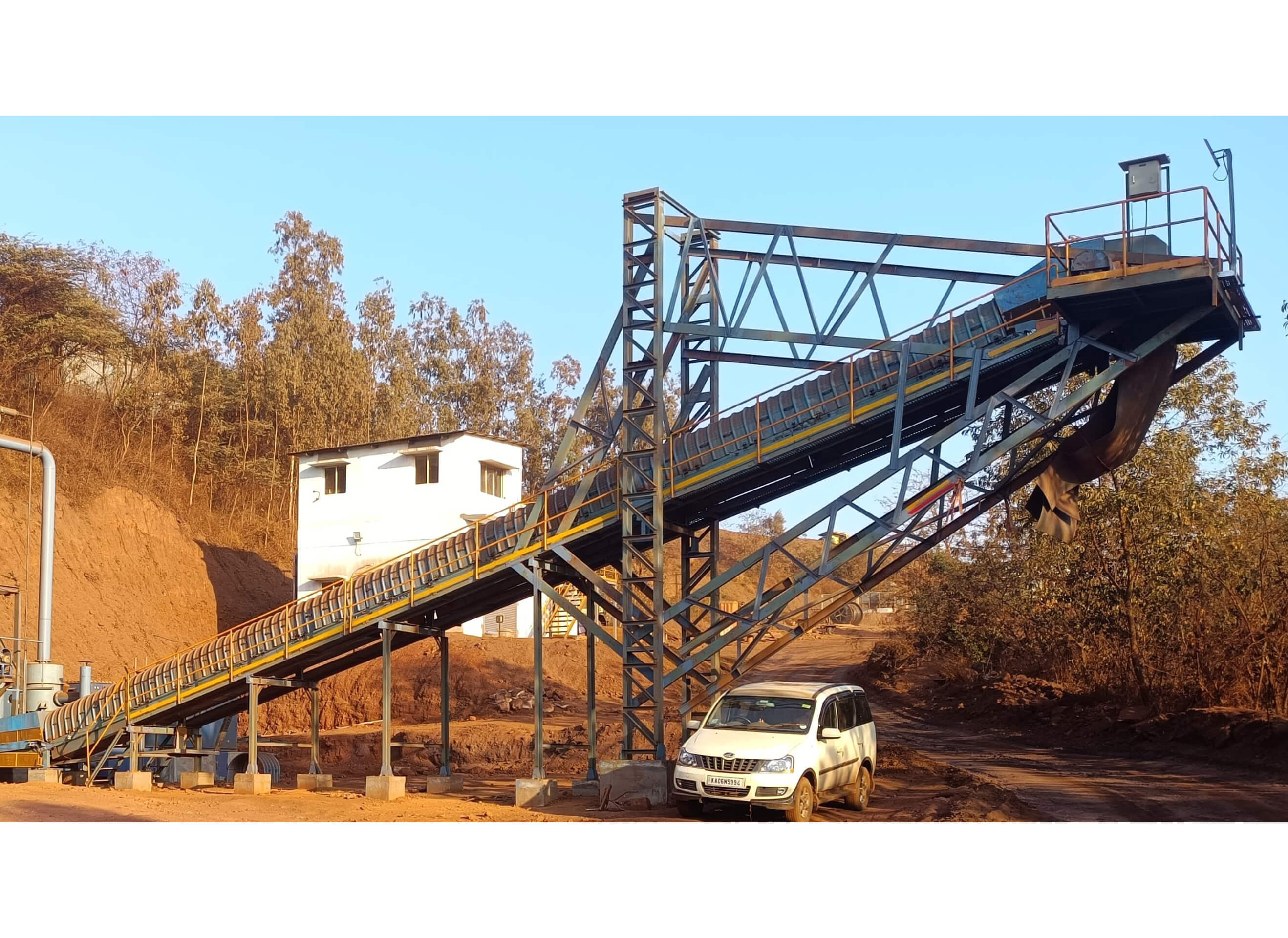
Belt Conveyors (High-Capacity Bulk Handling)
Fourteckh Enviro (India) Private Limited is recognized as a premier Manufacturer, Supplier, and Exporter of high-performance Belt Conveyors. Known for their versatility and cost-effectiveness, our belt conveyors are the preferred choice for transporting large volumes of bulk materials over both short and extremely long distances. Our Belt Conveyors are engineered to handle high-capacity loads with minimal power consumption. From horizontal transport within a factory to inclined conveying between different plant levels, these systems provide a smooth, continuous flow of material for almost any industry. Our engineering team calculates the exact Belt Tension and Motor Torque requirements to ensure your conveyor starts smoothly even when fully loaded. "Built to Last, Designed to Standard" Every Fourteckh Belt Conveyor undergoes a rigorous design process. By adhering to CEMA, IS, and BS standards, we provide our clients with:
- Optimized Power Consumption : Accurate motor sizing based on CEMA friction factors.
- Structural Reliability : Frames and supports designed to handle peak load stresses without deflection.
- Standardized Spares : Components like idlers and pulleys follow standard dimensions, ensuring easy replacement and long-term maintenance.
Technical Specifications & Components :
- Conveying Path : Horizontal or Inclined (up to 18 to 24 degrees) depending on material.
- Belt Types : Rubber, PVC, PU, or Heat-Resistant (HR) grades with varying ply counts.
- Idler Systems : Troughing idlers (carrying side) and Flat idlers (return side).
- Capacity : Scalable from a few tons to thousands of tons per hour.
- Distance : Modular designs ranging from a few meters to several kilometres.
System Architecture
- Drive & Tail Pulleys : Precision-machined pulleys ensure maximum grip. Drive pulleys are often "lagged" with rubber to increase friction and prevent belt slippage.
- Idler Rollers : High-quality, anti-friction rollers support the belt. Troughing idlers (typically 3-roll sets) shape the belt into a "U" to maximize carrying capacity and prevent spillage.
- Tensioning (Take-up) Stations : Vital for maintaining the correct belt tension. Options include Screw Take-ups for shorter conveyors and Gravity/Vertical Take-ups for long-distance systems.
- Belt Cleaners : Essential for removing "carry-back" material. We include primary and secondary scrapers to keep the return belt clean and protect the pulleys.
Working Principle :
- Loading : Material is fed onto the belt through a loading hopper, usually centered over a "cushion" of impact idlers to protect the belt from damage.
- Transportation : The motor-driven head pulley pulls the belt over the carrying idlers. The material remains stationary relative to the belt, ensuring no product degradation.
- Discharge : At the head pulley, the belt wraps around, and gravity discharges the material into a chute.
- Return : The empty belt travels back along the underside, supported by return idlers, completing the loop.
Advanced Safety & Monitoring Features :
Modern industrial standards require robust safety mechanisms. At Fourteckh Enviro, we integrate :
- Pull-Cord Switches : Emergency stop cables running the entire length of the conveyor for immediate shutdown.
- Belt Sway/Misalignment Switches : Automatically detects if the belt drifts off-center, preventing edge damage.
- Zero-Speed Sensors : Monitors the tail pulley to detect belt breakage or slippage against the drive pulley.
- Impact Cradles : Located at loading points to absorb the shock of falling material, significantly extending belt life.
- Skirt Rubber : High-grade sealing along the loading zone to prevent dust and side-spillage.
- Continuous Belt weighing system : with continuous readings to the control PLC/ SCADA system
- Guarding : 360 degrees protection cover for all moving parts
Common Applications :
- Mining & Aggregates : Transporting coal, iron ore, sand, and gravel.
- Construction : Moving cement, crushed stone, and bricks.
- Power Plants : Coal handling from stockpiles to bunkers.
- Port Terminals : High-speed ship loading and unloading.